Grants

2026 Driving Mobility and Accessibility on Public Lands Grant

With support from Toyota Motor North America, the National Environmental Education Foundation (NEEF) is pleased to announce $250,000 in grant funding to make public lands more accessible and enjoyable for people of all abilities. The 2026 grant program will focus on communities near Toyota Motor North America facilities and is restricted to 16 communities, as detailed below.  

Background

According to the Centers for Disease Control, over 75 million adults in America, or 28.7% of the US adult population, are living with some type of disability (DHDS 2025). The National Park Service conservatively estimates that 10% of visitors have a disability, which translates to nearly 30 million visitors annually (NPS All In!). Ensuring that everyone has genuine access to our shared public lands and waters is an ongoing challenge, though work to improve accessibility is supported by individuals, outdoor organizations, and land management agencies.

NEEF is committed to making the environment more accessible, relevant, and connected to people's daily lives. Together with our long-time partner, Toyota North America, who also has a focus on improving mobility and caring for the environment, the Driving Mobility and Accessibility on Public Lands Grant began in 2022 to support land managers in the pursuit of making public lands more accessible and enjoyable for people of all abilities. 

Through the initial two grant years, NEEF worked with 23 grantees. The grant program supported more than 100 accessibility enhancements and over 30 adaptive recreation programs. NEEF looks forward to continuing this legacy with a new iteration of the grant program.  

Overview

Through the 2026 Driving Mobility and Accessibility on Public Lands grant, NEEF aims to: 

  • Increase the capacity of local organizations and government agencies to address mobility and accessibility considerations on public lands; and
  • Improve the level of access, comfort, and enjoyment experienced by public lands visitors of all abilities, together with their families and friends. 

The grant will provide up to $20,000 per grantee to increase physical or digital access, provide adaptive recreation equipment or programming, or perform accessibility assessments on public lands in communities near 16 Toyota Motor North America facilities.

Apply Now


Eligibility

  • Open to nonprofit 501(c)(3) organizations, state or federal government agencies, and federally recognized tribes and local governments.
  • Organization must have been in existence for at least two (2) years.
  • Must be a project on public land, which, for the purposes of this RFP, is defined as any federal, state, local, county, or regional land or waterway accessible to the public for the purposes of recreation. This may also include nonprofit-managed public lands, such as land trusts, if the primary mission of the organization is conservation and recreation on that land.
  • Projects must take place on public lands located within 50 miles of one of the eligible communities (see below).
  • Nonprofit 501(c)(3) organizations must provide a partnership letter from the public land site if they are not the managing entity of the public land site.
  • Project must meet the project criteria (see below). 

Private, for-profit firms and individuals are not eligible to apply. Grant funding may not be used to support political advocacy, fundraising, lobbying, litigation, terrorist activities, or Foreign Corrupt Practices Act violations. 

Eligible Communities

Projects must take place on public land within 50 miles of any of the communities below.

  • Huntsville, AL
  • Chandler, AZ
  • Tempe, AZ
  • Long Beach, CA
  • Alpharetta, GA
  • Princeton, IN
  • Georgetown, KY
  • Ann Arbor, MI
  • Troy, MO
  • Blue Springs, MS
  • Liberty, NC
  • Henderson, NV
  • Jackson, TN
  • San Antonio, TX
  • Plano, TX
  • Buffalo, WV
     

Project Types

Projects must focus on at least one of the following:

  • Public land and trail accessibility assessments
  • Digital accessibility improvements (e.g. website or visitor center improvements for visitors with vision or hearing impairments)
  • Recreation equipment for people with disabilities (equipment must be made publicly available)
  • Programs to improve public land access for people with disabilities (e.g. adaptive recreation programs like paddling or cycling)
  • Physical accessibility improvement projects (e.g. trails, boardwalks, bridges, kayak launches, volunteer program accessibility improvements, etc.) 

Project Criteria

  • Focused on one or more of the eligible Project Types (see above).
  • Must be completed within the 12-month grant period.
  • Project must include people with disabilities in the planning and implementation of the project, such as consulting volunteers or visitors with disabilities and partnering with local disability groups to review plans and/or promote events.
  • Applicant must plan to sustain and maintain the project or program after the period of performance ends.
  • Project must follow universal design and access principles (see Resource Section below for definitions).
  • Specifically for physical improvements:
    • May not be partial elements of a broader project (i.e. grant contributes to a pool of funding for a master plan or larger project) .
    • Must go above and beyond the minimum required design guidelines outlined in the Americans with Disabilities Act, including but not limited to the guidelines on NEEF’s Requirements for Physical Improvements (see Resource Section below). 

Application

Applicants will be asked to address the following in the application.

  • Describe how requested funds will support projects that address mobility and accessibility on public lands.
  • Describe how people with disabilities will be included in project planning.
  • Explain how the project incorporates inclusive universal design principles and describe how the project goes above and beyond the minimum design guidelines of the Americans with Disabilities Act.
  • Provide a detailed timeline of when programming/activities will take place during the grant year.
  • Provide a detailed list of the project team, including partners and accessibility experts who will be responsible for implementing grant activities.
  • Provide a plan for how the project or events will be marketed to the community and specifically to individuals with disabilities.
  • Provide a plan for how activities/improvements will be maintained/sustained after the grant period has ended.
  • All project proposals must include a Letter of Support from an accessibility or design expert or organizational partner (as specified below). Experts and organizational partners can include architects, product vendors, accessibility leaders, organizational partners who specialize in serving people with disabilities, senior organizational leaders, etc. The Letter of Support must be signed and on letterhead, acknowledging that the expert or partner has reviewed the project, it follows universal design and access principles, and exceeds ADA guidelines (as they pertain to physical and digital projects).
    • Physical/Digital Improvement Projects – Letter of Support must be from an accessibility or design expert who has viewed the proposal and approves that the design exceeds ADA guidelines.
    • Adaptive Recreation Equipment – Letter of Support must be from an accessibility or design expert or an organizational partner who specializes in serving people with disabilities. The letter acknowledges that the equipment follows universal design and access principles.
    • Adaptive Programs – Letter of Support must be from an organizational partner who specializes in serving people with disabilities. The letter acknowledges that the program will benefit people with disabilities in addition to friends, family, and caregivers.
    • Assessments – Letter of Support must be from agency leadership or an organizational partner who specializes in serving people with disabilities. The letter must support the need for the assessment.

NEEF encourages applicants to create an account in NEEF’s grant portal to view the full application before deciding whether to apply.  

Timeline

The approximate timeline for grant application, review, and implementation is:

  • Application opens: January 14, 2026
  • Application deadline: February 18, 2026, at 11:59 PST
  • Grants awarded: April 2026
  • Period of performance: May 2026-April 2027
  • Interim report due: November 2026
  • Final report due: May 2027 

Expectations If Funded

If selected, grantees must be able to collect and report on relevant key performance indicators (KPIs), including: 

  • Number of physical or digital accessibility enhancements
  • Number of accessibility programs/events created
  • Number of event participants/equipment users engaged
  • Number of partnerships formed 

Grantees will be expected to participate in periodic virtual meetings with NEEF.

Grantees will be required to turn in an interim report and a final report via NEEF’s grants portal. Throughout the grant period, grantees may be asked for periodic updates or photos, especially for construction-based projects.  

Publicity

Grantee is required to acknowledge NEEF in all advertising and published material related to the funded activity, which includes, but is not limited to websites, articles, publications, presentations, brochures, newsletters, blogs, social media, education materials, print advertising, or other discussion of this project by the grantee.

NEEF requests that the Grantee provide photos and tag NEEF in one to two social media posts when possible. If the media features identifiable faces of participants, the Grantee must accompany the photos with a signed NEEF media release form. For participants under 18 years of age, the form should be signed by a parent or guardian.  

Submission

Driving Mobility and Accessibility on Public Lands grant applications are only accepted through NEEF’s online system.  

  1. Click here to apply.
  2. You will be taken to a login page. If you have not created an account from a previous NEEF award, select Create New Account. If you have created an account with NEEF, skip to step 4
  3. Follow the instructions to create your account. It will ask you for your contact information as the account holder and the contact information for your organization’s representative. Contact information supplied in the User Information section should reflect the individual who will be directly handling the application process for your organization.
  4. Upon creating an account, the portal will take you to your home screen. To start your application, click Apply in the menu on the left. You will be taken to a list of NEEF awards and funding opportunities.  Select Mobility and Accessibility on Public Lands.
  5. Complete the application. You can save the application and return later. Pay close attention to character limits. These limits include spaces.
  6. Once you have completed the application and uploaded all attachments, click Submit Form to complete your application. If you do not click Submit Form, you will not have completed your application. You will receive an email confirming your application was submitted. 

NEEF’s Grant Frequently Asked Questions page can be helpful for general questions about the process. https://www.neefusa.org/grants/neef-grant-glossary-and-faqs  

Contact

Please contact grants@neefusa.org for all questions regarding this grant or the grant portal.

Apply Now

Download the PDF
Hard copy of the RFP for use during application period.

2026 Driving Mobility and Accessibility on Public Lands Grant Resources and Example Projects

Definitions

Minimum Requirements for Physical Improvements

In addition to the legal requirements (compliance with the Americans with Disabilities Act Design Standards), public lands sites of all types and sizes can embrace and incorporate accessible and inclusive universal design principles when developing facilities and programs. This guide will outline the minimum design requirements for the most common public land accessibility improvements. For elements not specifically referenced, please consult the ADA design standards and ensure your proposed project goes beyond the minimum required for that element. Projects should honor the design principles of universal design, to be “usable by all people, to the greatest extent possible, without the need for adaptation or specialized design.”

NEEF will accept applications for projects other than the ones listed above. Please consult the Access Board’s minimum ADA requirements and ensure the proposed project goes above and beyond ADA minimums and is designed in the spirit of universal design. Additionally, the United States Access Board developed guidelines for Outdoor Developed Areas, including trails, picnic areas, and viewing areas.   

Project Examples

R.A. Apffel Beach Park Accessibility Program
Image
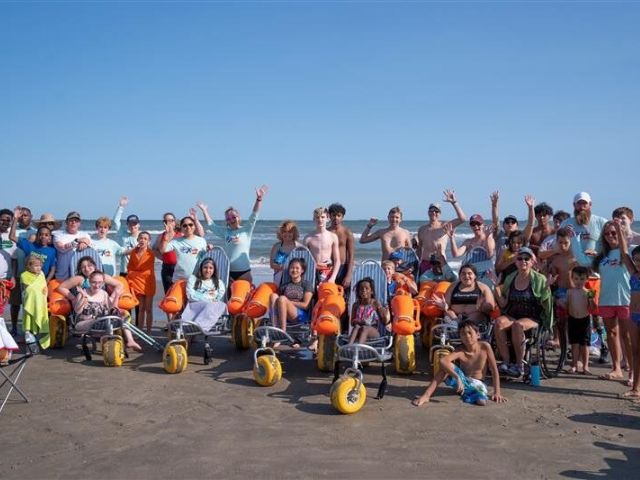
Large group of people of all ages on a beach with some in beach wheelchairs. R.A. Apffel Beach, Park Board of Trustees of the City of Galveston 

The Galveston Park Board increased accessibility for guests with disabilities at R.A. Apffel Beach Park by installing 500 linear feet of Mobi-Mat pathways on the beach and purchasing beach wheelchairs. The equipment remains readily available as a part of the Galveston, TX Beach Wheelchair Program.
Young Sound Seekers Lab
Image
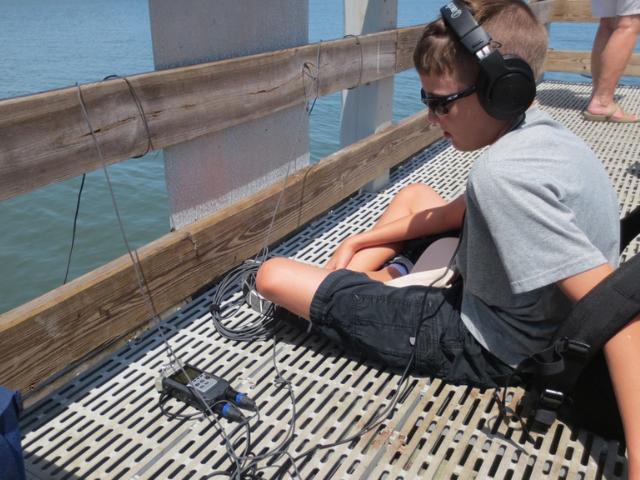
Boy with headphones on using audio equipment on pier. Canaveral National Seashore, Atlantic Center for the Arts

The Atlantic Center for the Arts expanded its existing Young Sound Seekers Lab to produce a summer audio lab for 40-50 blind, partially-sighted, and fully-sighted youths. Through visits to Canaveral National Seashore and nearby parks, students created and shared audio postcards using the natural soundscape through public media.
Accessible Kayak Launch at Riverlands
Image
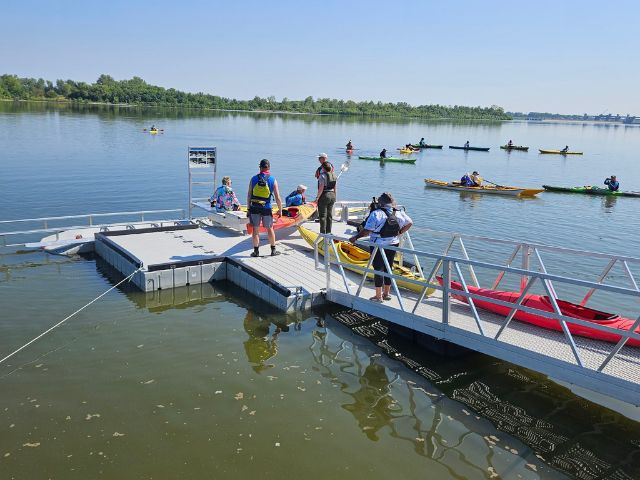
People loading boarding kayaks from an adaptive water access platform. Mississippi River Water Trail, Mississippi River Water Trail Association

The Mississippi River Water Trail Association installed a universally accessible kayak launch within the Riverlands Migratory Bird Sanctuary (RMBS). They celebrated the opening with Team River Runner, a national organization that helps disabled veterans experience paddle sports.
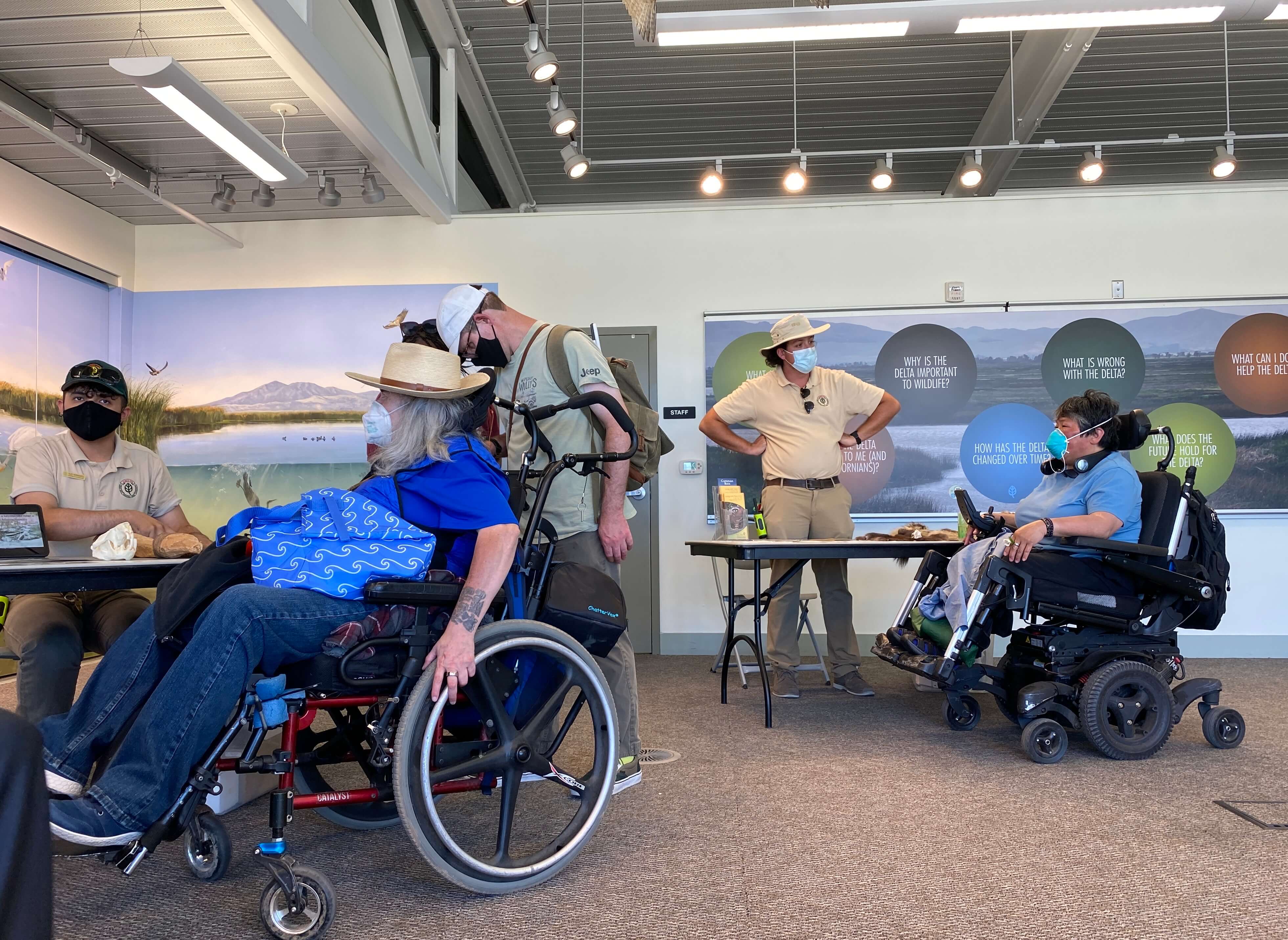
Bay Area Outreach and Recreation Program
Image
Visitor center: Park staff behind tables set with pelts and objects found in the park talk with visitors in wheelchairs

The Bay Area Outreach and Recreation Program’s Access to Nature project built on the success of their website of accessible trails by surveying and adding 15 detailed trail reviews and five camp opportunities in East Bay Parks, enabling people to easily identify trails that best fits their needs.