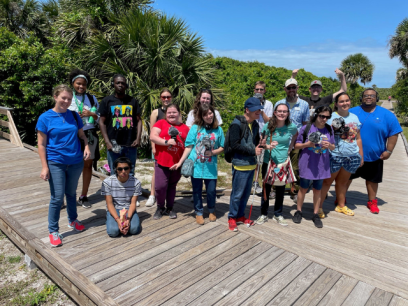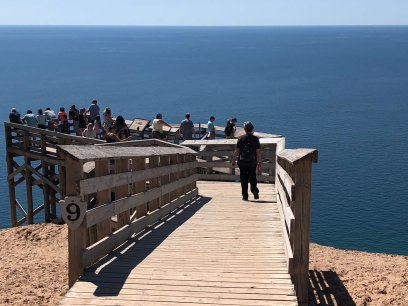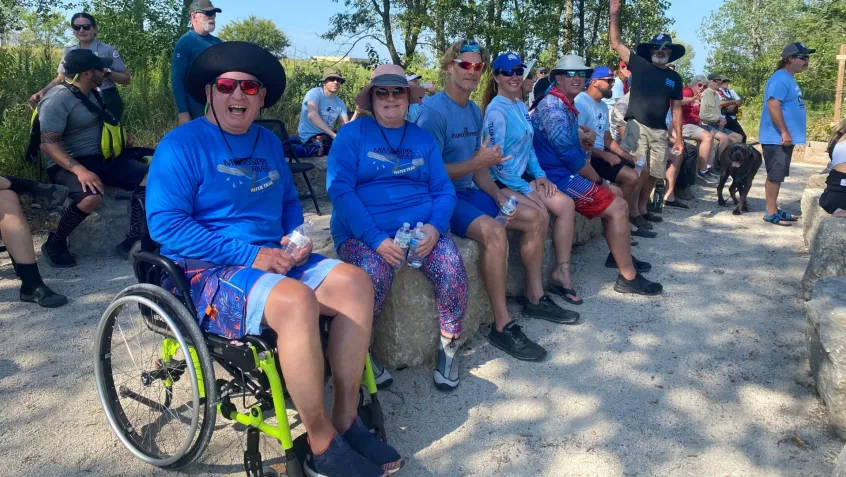
For Dr. Ed Price, the problem is simple to describe and hard to solve. Price works with people with mobility issues every day, and he puts it clearly: "A single step is a barrier." Price is the founder of the Trail Access Project, a nonprofit that helps people with disabilities find recreation opportunities among the rugged desert terrain surrounding Las Vegas, Nevada.
“Each summer, our clients ask if we can hike in the Spring Mountains National Recreation Area, a local mountain bordering the valley where temperatures are up to thirty degrees cooler at 9,000 feet in elevation,” said Dr. Price. “Unfortunately, there are no ‘accessible’ trails there, so our clients cannot use their personal wheelchairs on the more rugged trails.”
This experience is more common than most people realize.
Research consistently shows that people with disabilities gain meaningful physical, mental, and social health benefits from time in nature, yet they remain among the least likely to access it. A 2023 study found that roughly half of the world's 1.3 billion people with disabilities report mobility issues that limit their ability to move around or engage in outdoor activity. The barriers are structural, informational, and interpersonal, and they compound each other.
The National Park Service conservatively estimates that 10% of visitors to America’s National Parks—roughly 30 million people each year—have some form of disability. For many of them, the gap between wanting to visit a public land and actually doing so comes down to specific, solvable problems, such as a trail with no reliable accessibility information, terrain that standard mobility equipment can't handle, or park staff who lack training to assist visitors with disabilities.
Since 2022, NEEF has partnered with Toyota Motor North America on the Driving Mobility and Accessibility on Public Lands grant program, which helps public lands across the US identify and address exactly these types of barriers. After reviewing dozens of successful grantee projects, a few key patterns began to emerge.
Accessible Trail Information Helps Visitors Plan with Confidence
Bonnie Lewkowicz, founder of Access Northern California, has spent years documenting what viable, real-world information on the “accessibility” of outdoor spaces actually looks like.
As a wheelchair user, Lewkowicz understands that clear and detailed descriptions of accessible trails and facilities are essential for people with varying levels of mobility to feel confident in using them.
“Just saying something is accessible isn't the full story,” said Lewkowicz. “People need as much information as possible so they can make an informed decision about what park or trail is going to work for them.”
With funding from NEEF’s Driving Mobility and Accessibility on Public Lands grant, Access Northern California surveyed and added 15 access-detailed trail reviews and five camping opportunities in northern California, covering information on amenities like bathrooms, parking, picnic areas, pathways between facilities, access to trailheads, and specific details on trails such as surface, width, terrain, and slope.
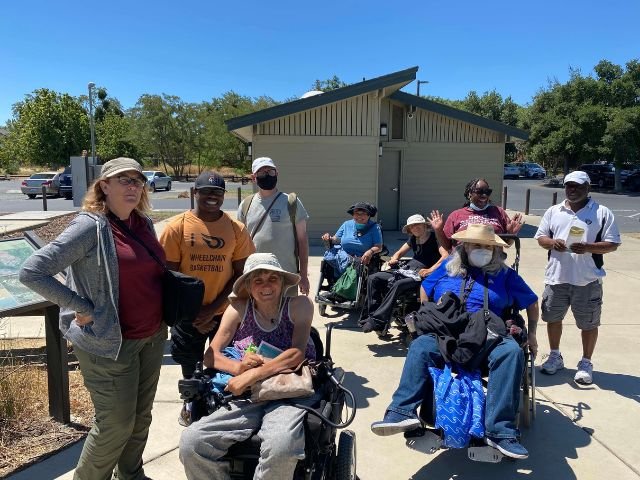
In the process of conducting the access surveys, several barriers were found, including at one of the “accessible” restrooms at Point Pinole Regional Shoreline along the northern arm of the San Francisco Bay. When Lewkowicz and her team brought this to the attention of park management, they were very appreciative and immediately fixed the issue.
“We have had great success getting barriers quickly removed when we report them, and have been told that formally filing access complaints ultimately helps the park district maintain and create greater access for all people,” said Lewkowicz.
Just saying something is accessible isn't the full story. People need as much information as possible so they can make an informed decision about what park or trail is going to work for them.
Bonnie Lewkowicz, Founder of Access Northern California
Staff Training Makes Parks More Welcoming to People with Disabilities
Sometimes, the barrier to increasing accessibility on public lands is simply a lack of resources or staff trained to assist those with mobility issues. In these cases, it can be worthwhile to bring in outside help.
In 2024, NEEF grantee Blue Ridge Park Foundation (BRPF) partnered with Waypoint Adventure to launch an adaptive kayaking program at Price Lake in North Carolina.
Funding from NEEF’s Driving Mobility and Accessibility on Public Lands grant was used to purchase an accessible kayak trailer and provide disability inclusion and access training for BRPF staff led by Waypoint.
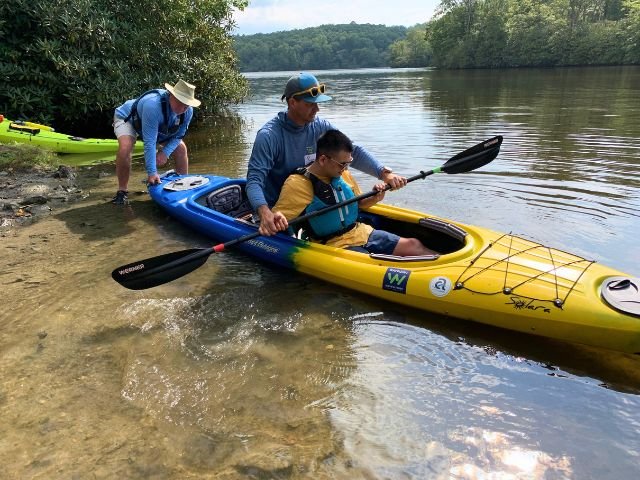
Staff members praised the training for reinvigorating their commitment to service, with one person saying, “I came into this partnership well-versed in kayak programming, but I felt like I really expanded my knowledge and skills in interacting with people with disabilities.”
Adaptive Equipment Opens Terrain to More Visitors
A 2023 meta-analysis found that people with physical disabilities who participated in adaptive sports and recreation showed significant improvements in both physical and mental quality of life. However, that same body of research makes clear that accessibility challenges routinely keep people with mobility impairments from outdoor activity in the first place.
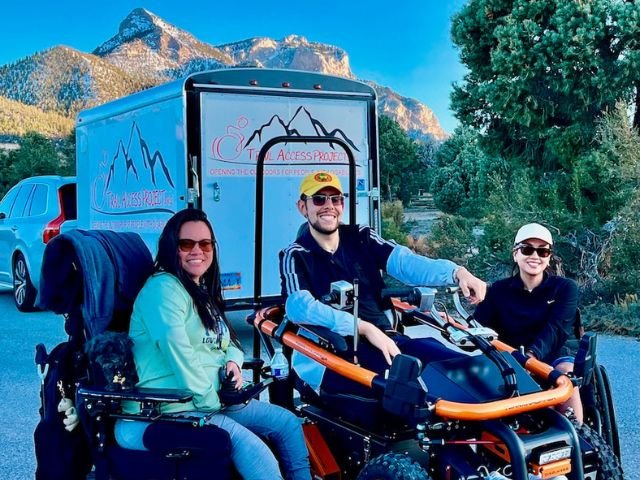
With funding from NEEF's Driving Mobility and Accessibility on Public Lands grant program, Dr. Price and the Trail Access Project were able to purchase a TerrainHopper, a rugged assistive vehicle capable of tackling the technical trails of Nevada’s Spring Mountains National Recreation Area.
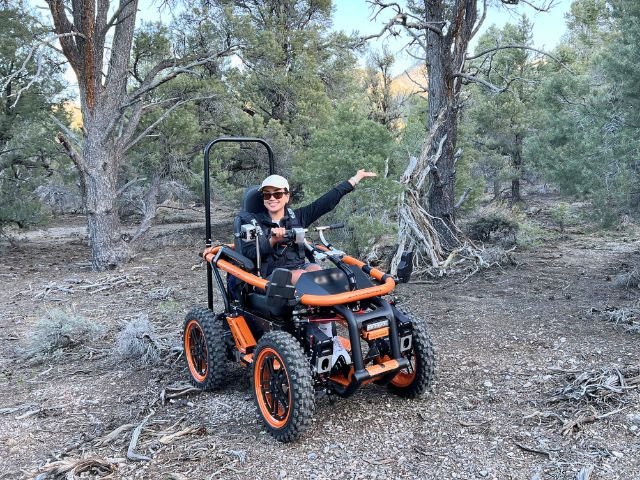
But with that challenge conquered, a new one was revealed—the limited number of trails at national, state, and local parks and recreation sites that allow motorized wheelchairs or assistive devices. While Dr. Price is continuing to work with local land management agencies on this issue, “progress is slow” he says.
Closing the Accessibility Gap for Every Visitor
Taken together, these improvement projects reflect what the research suggests—access is rarely one problem with one solution, but a layered set of barriers that require thoughtful responses. Targeted investment, directed by people who understand those barriers from lived experience, is how public lands can close the gap between who can theoretically visit and who actually does.
To learn more about how NEEF is helping public lands invest in accessibility, check out our Grants page, or you can email us at grants@neefusa.org for more information.