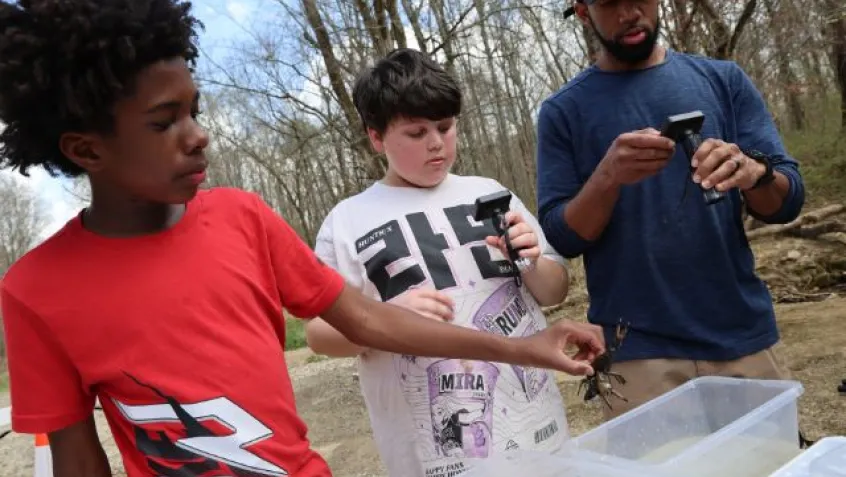
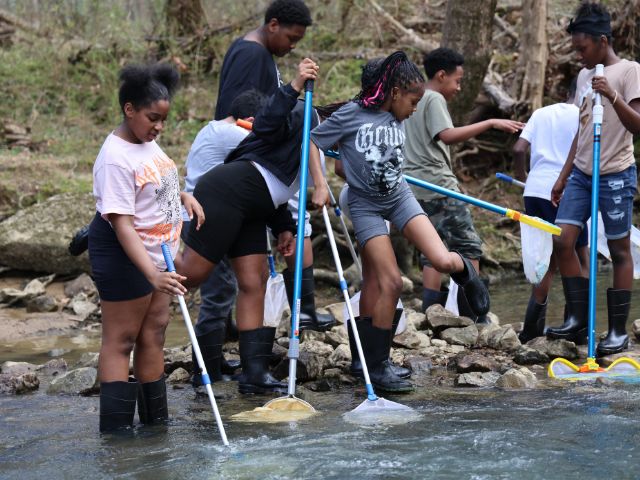
On a clear day in early March, more than 50 sixth graders waded into a creek at Hays Nature Preserve outside Huntsville, Alabama, looking for critters. Not just any critters, but macroinvertebrates, whose presence—or absence—would help them form a hypothesis about the creek's water quality.
"I think every student got in the creek over the past two days," said Joel Donelan, environmental education coordinator for the City of Huntsville.
This was more than simply a fun day at the park. The creek visit was one session in a months-long program built around a single driving question: how does community growth affect natural spaces? And the urgency behind that question is real.
Growing Pains and Green Spaces
Huntsville is one of the fastest-growing cities in the US. Over the past five years, the area’s population has increased by nearly 16%, with an estimated 18 people moving to the city per day.
While the city is working to increase its housing stock, this rapid influx of people has begun to put pressure on the area’s unique biodiversity. Alabama is the fourth-most biodiverse state in the country, with more than 6,350 distinct native species, and the most biodiverse state east of the Mississippi River.
NASA remote sensing data shows that the Huntsville metro area experienced a 4°F rise in land surface temperature from 2010 to 2019. This “heat island effect” is likely driven by the growing area of impervious surfaces, such as rooftops and asphalt, which absorb and radiate heat, coupled with a loss of tree canopy and vegetation cover as the city has grown.
Green Team, Greening STEM, Greener Communities
Enter Operation Green Team, a Keep America Beautiful affiliate focused on litter reduction, recycling, and community improvement.
“We work to inspire our community to learn more about how to be good stewards of our environment,” said Donelan, whose environmental education duties also extend to managing the Green Team.
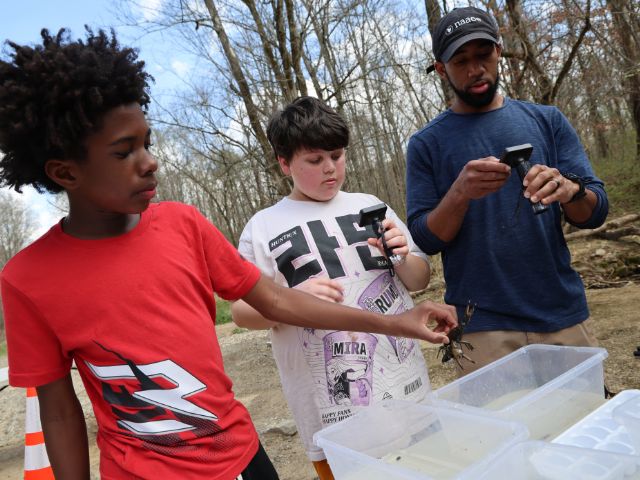
A major part of the team’s mission, said Donelan, is environmental education outreach to students, teachers, and homeschool groups through classroom visits and field trips. “Students have a unique ability to teach those around them,” he said. “We try to highlight the things they are already passionate about.”
Three years after launching their Green Ambassador program, Donelan and his team wanted to deepen that work. Passion for the environment was a starting point. Turning that passion into action required something more. They applied for and received a NEEF Greening STEM grant.
“Students don’t always understand the deep level of critical thinking required in STEM fields,” said Donelan. “Greening STEM creates a great framework for these concepts.”
Students don’t always understand the deep level of critical thinking required in STEM fields...Greening STEM creates a great framework for these concepts.
Joel Donelan, Environmental Education Coordinator, City of Huntsville, AL
Engaging Students with Hands-on Outdoor Education
As a recipient of a 2025-2026 PPG Foundation Greening STEM grant, Donelan and the Green Team designed a project-based program spanning the full school year with Chapman Middle School, a partner for the past three years.
Over multiple sessions of in-class talks and outdoor activities at Hays Nature Preserve, students would assess the health of North Alabama's natural environments across categories including water quality, forest diversity, soil quality, and wildlife, then return to the classroom to analyze their findings and present conclusions about how growth is reshaping their community.
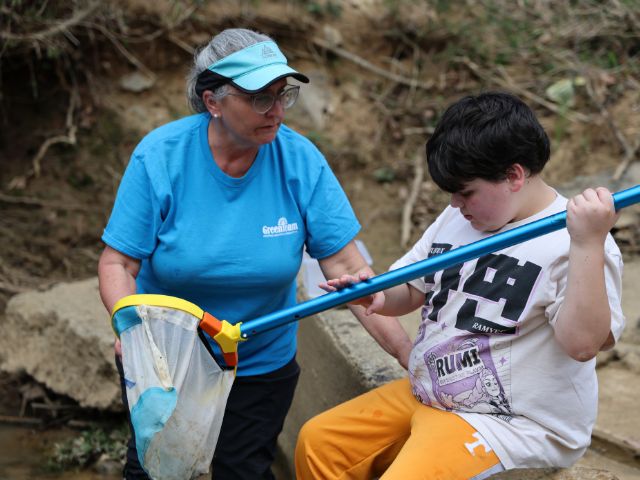
The creek visit in early March was one of those sessions. Armed with nets, students waded in and collected samples, then checked their findings against a classification system that links macroinvertebrate species to water quality. Certain insects signal clean water. Others are cause for concern. By the end, students were drawing their own conclusions about the health of the creek based on what they had found.
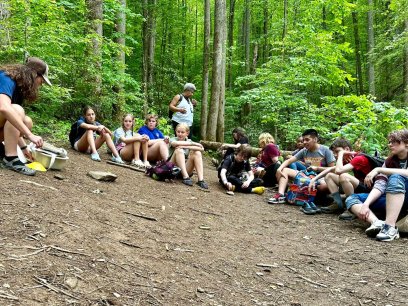
The Green Team also led students on guided hikes of Tupelo Swamp, Glass Lake, and the Flint River, to witness how these key wetland habitats protect local water quality and biodiversity. Taking inspiration from the natural methods they had just seen, students used plastic cups, pipe cleaners, and all the dirt, rocks, and grass they could find to build their own water filtration models, learning firsthand how the rate of water flow affects the efficacy of filtration.
“I’d rather do this than study in a classroom,” said one student. “This is a lot more fun.”
During a lunch break, Jason Richburg, Global Engineering Manager at PPG, spoke with students about how sustainability and fiscal responsibility can work together in a business setting, and how a passion for nature can translate into a career.
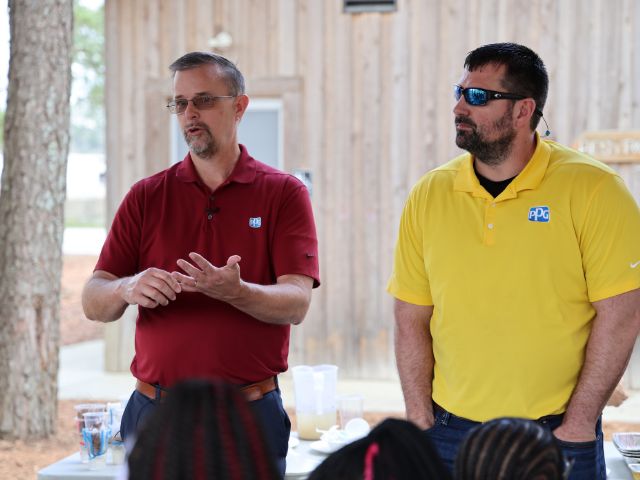
“It reminded me why learning outside the classroom can be so powerful,” said Richburg. “What I really hope they took away from the day is that the environment isn’t just something we read about, it’s something we’re all connected to and responsible for.”
Creating a Culture Shift Through Greening STEM
Donelan has noticed a tangible culture shift in the schools and communities where he and the Green Team work. Kids who rarely spend time outdoors are now exploring local public lands with their families. Local school curriculum has grown more environmentally focused, and teachers say their students have been more open to exploring careers in STEM as they move from junior high to high school.
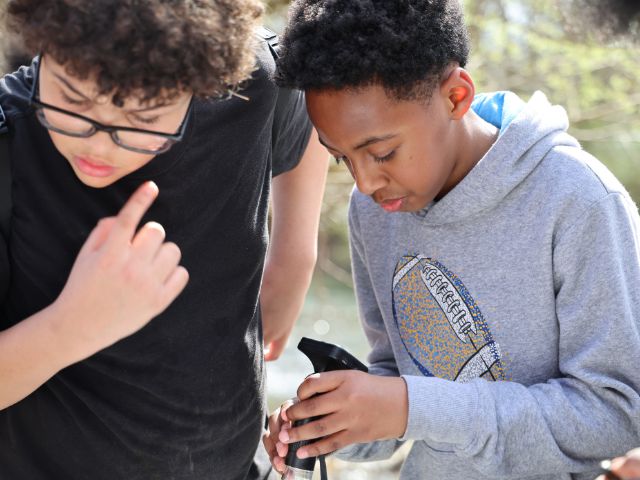
“There are students that we hosted three years ago who are still interested in learning environmental STEM concepts,” said Donelan. “I just had lunch with a group of former students who built a mock solar house out of cardboard and tinfoil. Seeing them take that kind of initiative has been really inspiring.”
Investing in More Engaged, More Sustainable Communities
Donelan believes that Greening STEM projects like this one are key to supporting Operation Green Team and the City of Huntsville’s mission to improve the quality of life for its citizens while planning for future growth.
By planting seeds for future generations who have a better grasp of human impacts on the environment, they will live healthier, more active, and sustainable lives while keeping their community clean and beautiful. This in turn will help ease the strain on the city’s resources as its population continues to grow.
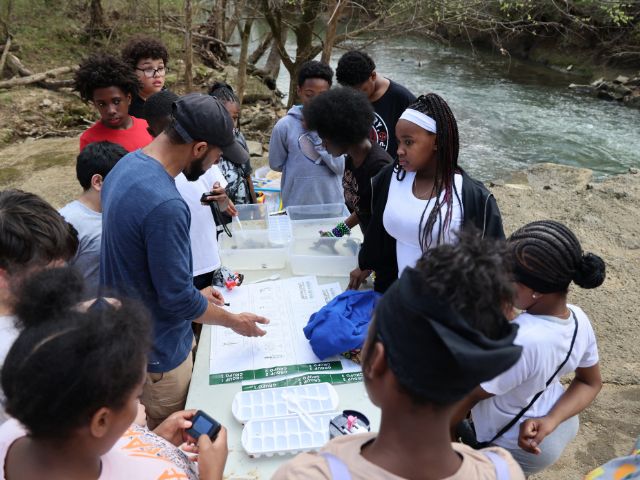
“Often, people don’t realize what they’re doing when they litter, the impact it has on the environment,” said Donelan. “Showing students firsthand the human impact on the preserve, seeing trash in the Flint River, these experiences create responsible citizens. They create citizens that take their environment seriously.”
By instilling an ethic of stewardship at a young age, the city and its Green Team can more easily introduce higher concepts such as establishing community recycling programs, creating pollinator habitat, funding initiatives to curb local pollution, and more.
“We’re raising the bar for what the average citizen understands about nature,” said Donelan. “We’re showing them there are other ways to support the environment than nice, mowed grass.”