$250,000 in funding will support accessibility projects in communities near Toyota Motor North America facilities
WASHINGTON, DC— Public lands belong to everyone. Making them truly accessible is a long-term effort, and one that requires local action. The National Environmental Education Foundation (NEEF) and Toyota are investing in communities doing that work.
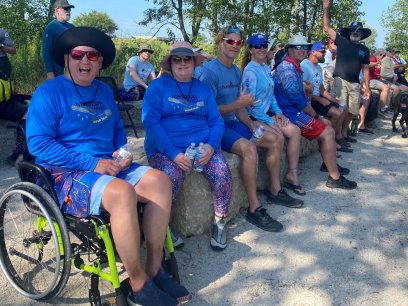
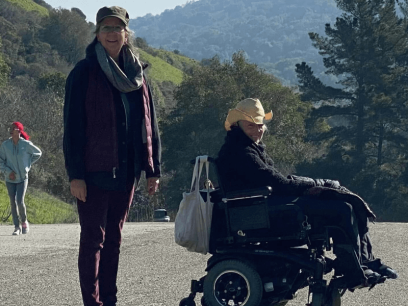
NEEF, with support from Toyota Motor North America, has awarded 13 grants through the 2026 Driving Mobility and Accessibility on Public Lands Grant. The selected projects span nine states, from Kentucky to California, and tackle access in creative ways, from all-terrain electric track chairs to adaptive kayaking.
The grant program, now in its third iteration, has supported more than 100 accessibility improvements and over 30 adaptive recreation programs since its launch in 2022.
By supporting NEEF's public land grantees, Toyota is advancing accessibility improvements near our communities and helping remove barriers so more people can explore, enjoy, and care for our shared natural spaces.
Kelli Gregory, Consultant, Sustainable Development, Toyota Motor North America
“This grant program has shown what's possible when local organizations have the resources to act,” said Sara Espoinoza, President and CEO of NEEF. “The 2026 cohort builds on that progress in meaningful ways, and we're excited to see what they accomplish.”
This year's grants will support projects near ten Toyota Motor North America facilities, with each grantee receiving up to $20,000 to fund physical improvements, digital access upgrades, adaptive recreation equipment or programming, or accessibility assessments.
“Everyone deserves the opportunity to experience the outdoors in ways that work for them,” said Kelli Gregory, Consultant, Sustainable Development, Toyota Motor North America. “By supporting NEEF's public land grantees, Toyota is advancing accessibility improvements near our communities and helping remove barriers so more people can explore, enjoy, and care for our shared natural spaces.”
Putting Accessibility at the Center
A distinguishing feature of this grant program is its requirement that accessibility be built into the planning and implementation of every funded project, not just the outcome. Grantees are expected to consult with disability community members, partner with local organizations, and principles of Inclusive Universal Design and go beyond the minimum guidelines of the Americans with Disabilities Act (ADA).
More than 70 million adults in the United States live with a disability, and the National Park Service estimates that roughly 10% of public lands visitors have a disability, nearly 30 million people annually. Despite this, meaningful access to outdoor spaces remains inconsistent across the country.
2026 Driving Mobility and Accessibility on Public Lands Selected Projects:
Pathways to Nature: Adaptive Access in Monte Sano State Park—Alabama State Parks Foundation, Alabama
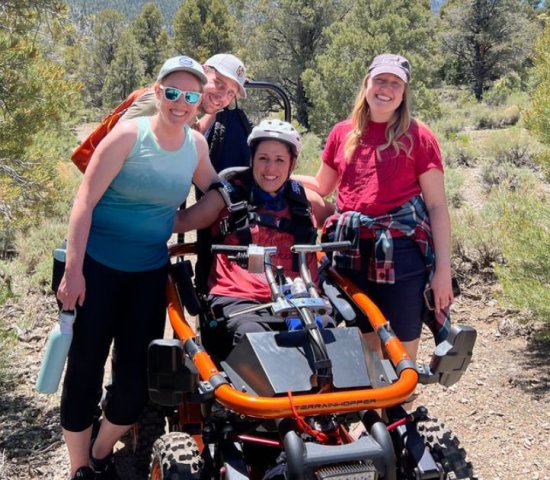
Monte Sano State Park's rugged terrain stretches far beyond its paved trails, leaving much of the park out of reach for visitors with mobility challenges. Alabama State Parks Foundation is adding a TerrainHopper electric off-road mobility vehicle, giving people with physical disabilities the ability to explore natural areas beyond standard accessible infrastructure.
Alamance Parks Adaptive Trail Chairs—Alamance Parks, North Carolina
Uneven terrain puts parks out of reach for many people with mobility challenges. Alamance County Parks is adding four GRIT Freedom chairs, all-terrain adaptive mobility devices that will allow visitors of varying physical abilities to use its trails and outdoor spaces.
Empowering People who Live with Physical Disabilities to Experience Kayaking on Chattahoochee River—Catalyst Sports, Georgia
Water recreation remains inaccessible for many people with physical disabilities. Catalyst Sports is bringing adaptive kayaking to the Chattahoochee River at Morgan Falls Overlook Park, using an accessible dock ramp, adaptive kayaks, and ACA-certified instructors to open paddling to a wide range of abilities.
Free Track Chair Rental Program: Ann Arbor Parks & Recreation and Leslie Science & Nature Center—City of Ann Arbor, Michigan
Varied terrain at Black Woods Ponds Nature Area limits who can experience its wildlife and natural spaces. Ann Arbor and the Leslie Science and Nature Center are providing a free all-terrain electric track chair for visitors of all mobility levels, available to community groups focused on mobility when not in use at the nature area.
Conger Park Walkway Accessibility Improvements—City of Jackson, Tennessee
A gap in accessible infrastructure has kept some visitors, including patients and families from an adjoining hospital, from fully using Conger Park. A new connective pathway linking the parking area to the park's universal design trail will feature wide, slip-resistant surfacing accessible to people of all abilities.
A Virtual Outdoor Experience at Red Spring Boardwalk, Red Rock Canyon NCA—Desert Research Institute, Nevada
For people who cannot visit Red Rock Canyon due to mobility or transportation barriers, its geological and historical attractions have been out of reach. The Desert Research Institute is creating a free 360-degree virtual tour of the Red Spring Boardwalk, with audio narration, multimedia captioning, and high-contrast visuals for people with visual impairments.
Project PINE: Promoting Inclusion in Natural Environments—Georgia State University Research Foundation, Georgia
Visitors with disabilities at Autrey Mill Nature Preserve face barriers that are not always visible or well understood. Georgia State University and the Center for Leadership and Disability will conduct a comprehensive accessibility assessment, leading to clearer signage, plain-language educational tools, and staff training to better serve parkgoers with disabilities..
Skullbuster Trails Accessibility Initiative—Kentucky Mountain Bike Association Bluegrass, Kentucky
Riders with mobility challenges have limited options for gearing up and accessing trails at Lytles Fork Recreation Area. The Kentucky Mountain Bike Association will assess the Skullbuster Trails for accessibility, update a primary trail with accessibility features, and construct a private changing room for riders with mobility challenges.
Sea and Watershed Accessibility Program—Orange County Coastkeeper, California
Accessing coastal wetlands and beaches is difficult for many people, starting with the planning process itself. Orange County Coastkeeper is updating its website with universal design features, creating an Indigenous-informed audio tour of Bolsa Chica Wetlands, and placing a beach wheelchair at Bolsa Chica and Huntington State beaches.
Equipping Accessible Exploration of Government Canyon State Natural Area—Texas Parks and Wildlife Foundation, Texas
The dinosaur tracks viewing area at Government Canyon State Natural Area sits 2.4 miles into rough backcountry terrain, putting it out of reach for many visitors. A TerrainHopper electric off-road mobility vehicle will be available free with park admission, opening that backcountry experience to people who cannot make the hike.
Liberty Recreation Access Project—Town of Liberty, Liberty, North Carolina
New splash pad and concessions facilities at Freedom Park risked being disconnected from accessible parking. This grant funds a wide, evenly surfaced walkway linking the parking lot to the new universal design features, built for multilane use by people of all mobility levels, including families with strollers.
Harold Simmons Park Universal Design—Trinity Park Conservancy, Texas
Visitors with physical and cognitive disabilities often arrive at parks without knowing whether the space can meet their needs. Trinity Park Conservancy will conduct a comprehensive accessibility assessment of Harold Simmons Park covering trails, neurodiverse support, multigenerational play, and gathering spaces, with findings used to build digital planning tools so visitors know what to expect before they arrive.