Lancaster students are cultivating skills, stewardship, and careers in agriculture and environmental science through hands-on learning.
When high school senior Valerie Gray set out to learn more about protecting the environment, she joined her school’s agricultural club. She expected to hear mostly about farming. Instead, she uncovered an entire world she never knew existed. “I learned everything from how food science ties into agriculture, how that connects to FFA (Future Farmers of America), what conservation and preservation actually mean to how a hydroponic system works,” she said.
The experience shifted her plans from studying psychiatry to a future in agriculture, and today she is the president of her school’s newly minted FFA chapter.
Valerie’s experience is one example of how students at McCaskey High School in Lancaster, Pennsylvania, are thinking about their future in surprising new ways.
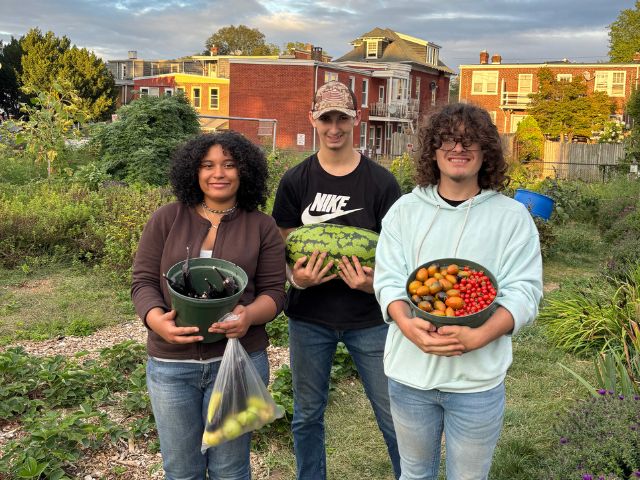
Exploring Careers in Agriculture and Environmental Science
- Farming and food production
- Animal care and veterinary work
- Conservation and wildlife management
- Environmental research and monitoring
- Sustainable technology and renewable energy
- Food processing, logistics, and supply chain
- Policy, education, and outreach
With support from the Arconic Foundation through NEEF’s Greening STEM Grant, McCaskey’s new Agricultural and Environmental Science (AES) program introduces students to farming systems, environmental stewardship, and sustainable resource management through hands-on learning experiences.
Brandon Bixler, the Agricultural and Environmental Science teacher leading the development of the new program, says he is thrilled when students discover how broad agriculture really is.
“I do a little statistics activity in the beginning of the year,” said Bixler. “Farmers are less than 2% of the workforce. Yet when you look at the scope of all jobs that are out there, it's somewhere close to 50% that are connected in some aspect to agricultural or environmental science topics.”
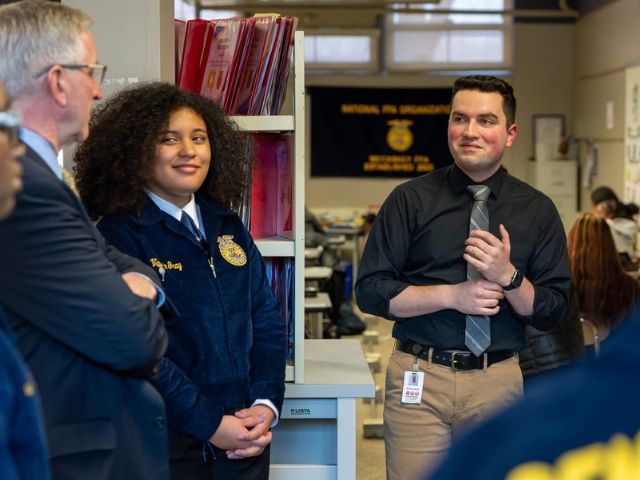
Developing Practical Skills
McCaskey High School serves nearly 3,000 students in a city setting, where many haven’t previously had opportunities for hands-on agricultural or environmental science experiences. “Agricultural and environmental science are not always front of mind for many of our students,” said Bixler.
Bixler grew up in Lancaster County, a region where agriculture is a major industry and part of everyday life. “I saw firsthand the impact that agricultural and environmental science education can have. My own ag teachers inspired me and set me on the career path I’m on today.”
I get excited thinking about our students and future graduates looking at agriculture and environmental science through an interconnected lens and figuring out how to do it sustainably, even when it’s not easy.
Brandon Bixler, Agricultural and Environmental Science teacher, McCaskey High School
On-campus field studies and sustainable learning
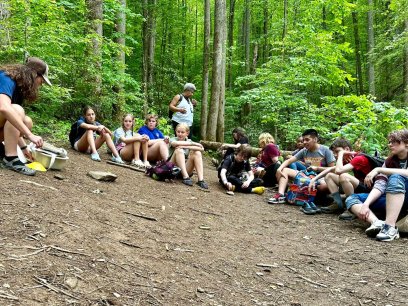
With support from the grant, the AES program is expanding hands-on opportunities by collaborating with agricultural and environmental businesses, local organizations, and community stakeholders to develop interactive Greening STEM experiences. In June, AES students traveled to Penn State University for the Pennsylvania FFA Summer Convention, where they received their first-ever McCaskey FFA Chapter charter. They also explored the Penn State Arboretum, examining environmental science topics and natural spaces in an educational setting.
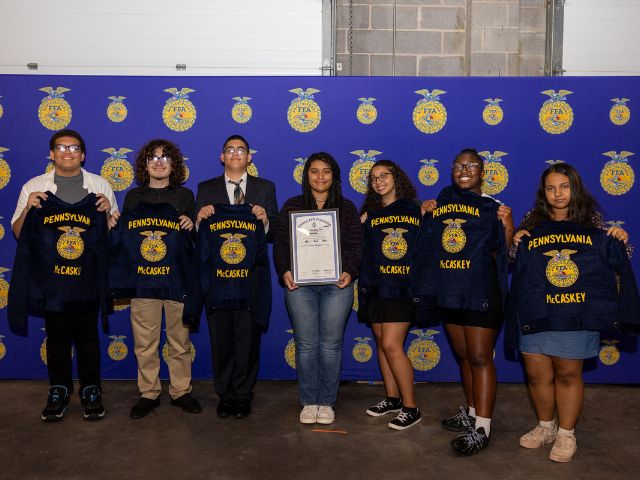
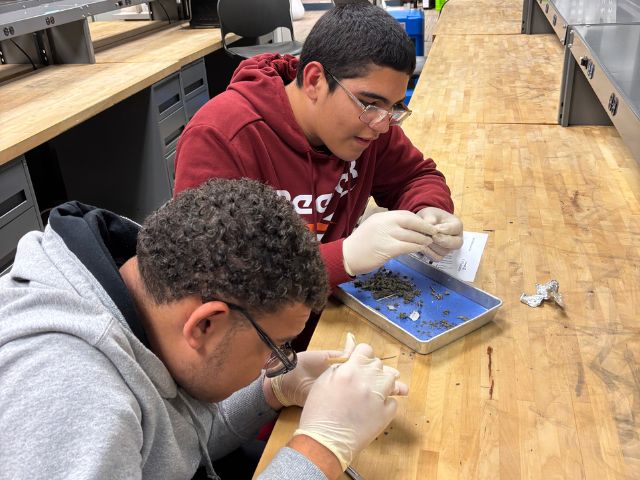
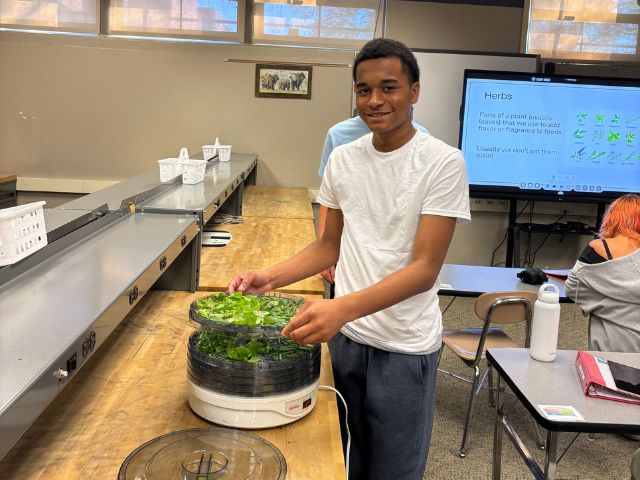
The first AES courses are now underway in the 2025–2026 academic year. Students have begun examining the environmental sustainability of hydroponic production methods and the related connections to food security and preservation. After-school McCaskey FFA chapter meetings are also deepening their learning, including recent activities such as owl pellet dissections and analysis of wildlife diets.
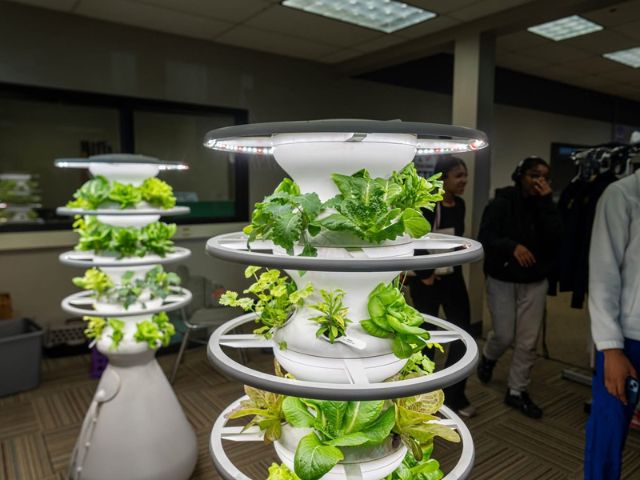
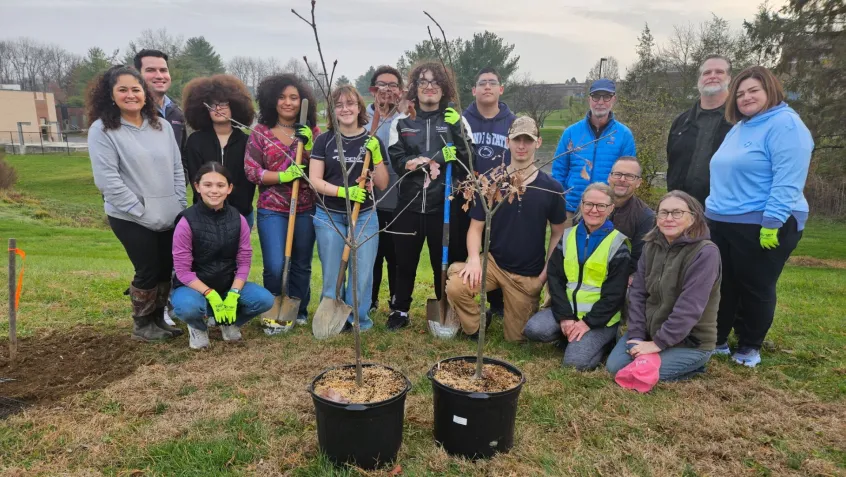
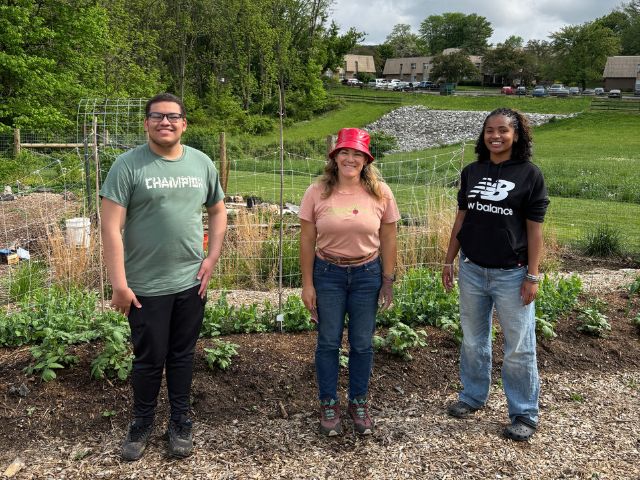
Students are participating in environmental monitoring, habitat restoration, and sustainability projects, using industry-relevant equipment to collect and analyze data. On campus, they explore freshwater habitats, assess green spaces and ecosystems, and compare growing systems including hydroponics, aquaponics, raised-bed gardens, green roofs, and greenhouse/high-tunnel spaces—learning sustainable and regenerative agriculture practices in the process.
“I get excited thinking about our students and future graduates looking at agriculture and environmental science through an interconnected lens and figuring out how to do it sustainably, even when it’s not easy,” said Bixler.
Off-campus field studies will introduce students to real-world applications in renewable energy, waste and water management, and farms and research facilities implementing Best Management Practices. Targeted field trips include visits to Thaddeus Stevens College of Technology, local environmental centers, botanical gardens, and research organizations such as Penn State Extension and Stroud Water Research Center. These experiences give students direct exposure to agricultural and environmental careers while fostering problem-solving, innovation, and an understanding of the systems that sustain communities and the environment.
Sharing Knowledge and Experiences
Along with learning from professionals, students are learning from each other. Lancaster is a Certified Welcoming City, a formal designation for cities and counties that have created policies and programs reflecting their values and commitment to immigrant inclusion, and nearly 13% of the population are residents who were born outside the U.S..
“Many students come with rich experiences in agriculture and environmental science from earlier in their lives, often from all around the world,” said Bixler. “Students have the chance to share their experiences like raising chickens, helping on a family farm, or working with relatives in agriculture.”
Expanding Opportunities for Students
The future looks promising for the AES program. Becoming part of FFA opens an additional avenue for student engagement and the program’s next phase centers on expanding hands-on coursework, strengthening partnerships, and building out on-campus spaces that will anchor long-term Greening STEM projects.
“Next year, we'll officially begin our career and technical education lab as well,” said Bixler.
Students like Valerie are already using AES experiences to shape their plans for the future. “I think a lot of us want to protect the environment, but we don’t always know how,” said Gray. “These classes and programs show us what we can actually do. For me, I realized I can make a difference through public policy, and that’s how I can create the change I want to see.”