In March 2026, NEEF presented at SXSW EDU in Austin, one of the leading conferences at the intersection of education, technology, and innovation.
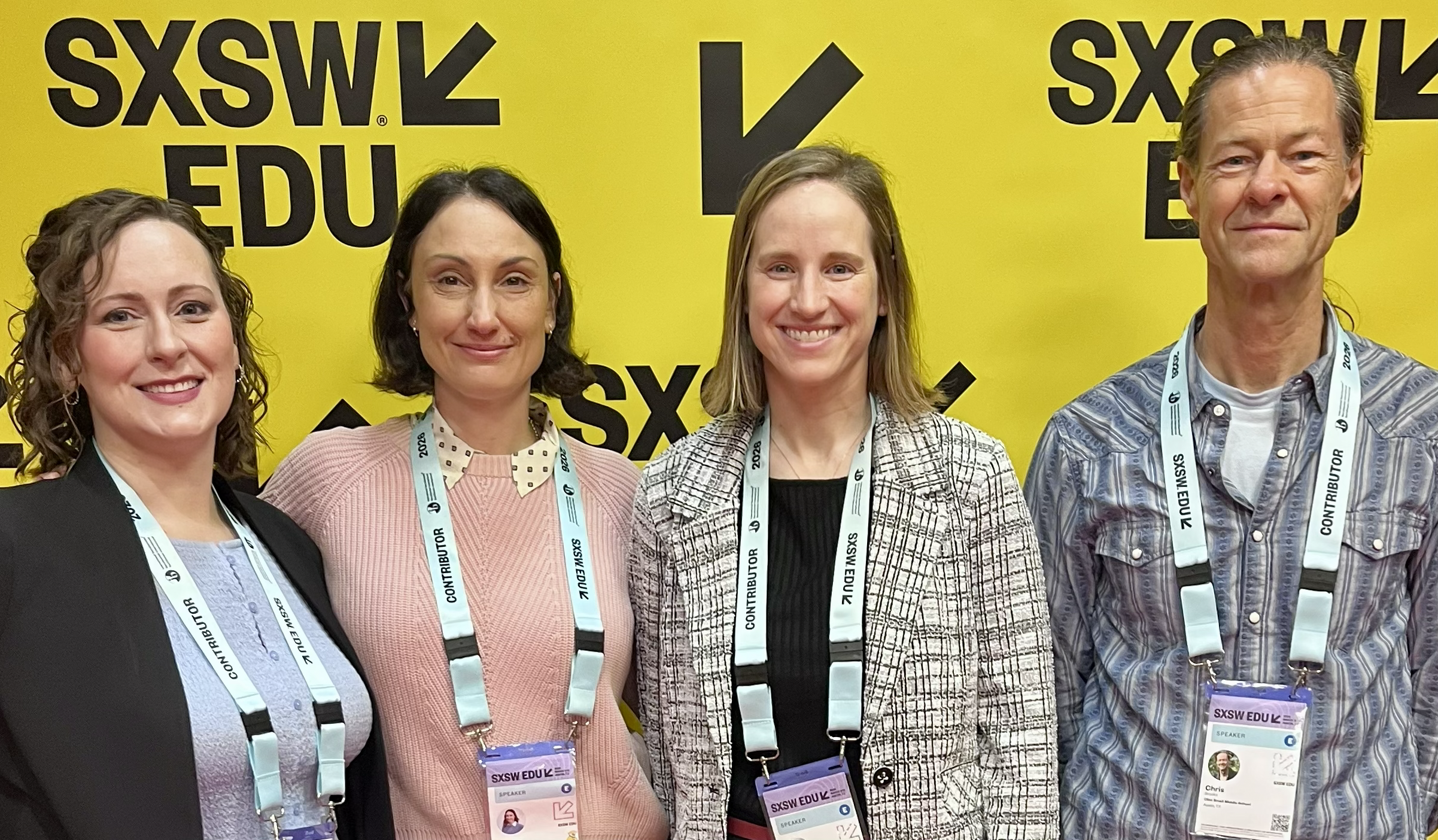
NEEF's President and CEO, Sara Espinoza, sat down with Megan Willig, Program Director for Environmental Education, who participated in the panel on climate emotions in education, to hear what she took away from the week. This article was originally published on LinkedIn.
Sara: AI was clearly the dominant theme at SXSW EDU this year. What was the mood in those conversations, and what are educators most worried about?
Megan: AI showed up in 142 sessions this year, more than any other topic. The conversations I heard blended real excitement with real caution. Educators are thinking hard about how to keep students and teachers at the center of decisions about AI in schools, and a lot of districts feel like they're already behind on policy.
There's a growing consensus that AI literacy needs to be woven into the curriculum across subjects, not treated as a tech class add-on.
There's a growing consensus that AI literacy needs to be woven into the curriculum across subjects, not treated as a tech class add-on.
An ongoing conversation in districts across the country is re-thinking the complete shift to online learning that took place during the pandemic to a more intentional, strategic approach to tech use. I heard from educators a desire to have guardrails in place for AI integrations, alongside a curiosity and interest in harnessing AI for transformative teaching and learning.
Sara: NEEF had a panel on climate emotions in education. What did you hear from the audience, and why does that matter for our work?
Megan: The panel went really well. We had an engaged audience, and the director of SXSW EDU actually told me that climate hasn't historically been a big part of the conversation there, so it felt meaningful to have NEEF in the room representing that perspective. When we asked the audience about their own climate emotions, what came back was striking. Two Gen Z women said they feel frustrated that their generation has been told it's their job to solve these massive global problems. Someone else shared sadness. Another person talked about the tension in their own family around climate anxiety and the choice not to have children. It really validated what our research has shown.
It felt unifying and poignant to have the audience share their own climate emotions, and it built a sense of community among all of us in the room. While the term may still be new for many in the field of education, climate emotions belong in the education conversation. Teachers can make a big difference in students’ overall well-being, their resilience, and ability to thrive by acknowledging their climate emotions as valid, providing them with tools to cope, and inspiring environmental stewardship.
Sara: One session made the case that AI literacy has to include climate literacy. Can you unpack that?
Megan: This came out of a session on AI and climate hosted by SubjectToClimate that featured researchers and educators from MIT, KIPP Schools, and the University of Pennsylvania. One researcher from MIT made a point that stuck with me: the "cloud" is not abstract. It's materials, energy, land, and infrastructure. One administrator from KIPP described how their district rolled out an AI policy without initially considering any environmental or ethical dimensions and then realized they were doing that in a county with 40 data centers sitting alongside redwood forests. They went back and rebuilt the framework to include climate. The argument being made was that if you're teaching students about AI, you have an obligation to teach them about its real-world footprint.
One researcher from MIT made a point that stuck with me: the "cloud" is not abstract. It's materials, energy, land, and infrastructure.
This connection matters for NEEF’s work and audience because developments in AI are moving rapidly, and we can help educators understand the broader implications and opportunities of these tools.
For example, we work with educators around the country through our Greening STEM program. Greening STEM educators engage youth in hands-on STEM activities on public lands of all sizes and explore local topics from migratory bird patterns to urban tree canopies. As STEM educators seek to understand how to prepare their students for career and college in STEM fields with AI integration, they can incorporate AI and climate literacy into their instruction.
Sara: What's the one thing you came back thinking the education field is still getting wrong?
Megan: One speaker from the University of Pennsylvania framed it in a way I keep thinking about. He said AI literacy is just the latest layer, after computer literacy, after media literacy, and the risk is that in all the excitement about new tools, we lose sight of whether students are actually learning. His concern was that machines are doing the learning, not the students.
I see that the opportunity now is to keep student-learning, collaboration, and creativity at the heart of education while integrating AI tools and AI and environmental literacy.
Sara: Megan's reflections stayed with me after our conversation. Not every student will pursue a tech career, but as AI becomes more integrated into day-to-day life, we all need to know how to use these tools effectively and responsibly. Pairing AI with experiential learning opportunities like Greening STEM is one way we can help youth build the skills they will need for the future.
Sara Espinoza, President and CEO of the National Environmental Education Foundation (NEEF), helps shape the future of environmental education through innovative programs and leadership, working to ensure sustainable growth and a lasting impact on communities.
Megan Willig, NEEF Program Director for Environmental Education, applies her experience as a public school teacher and environmental educator to NEEF's K-12 and youth-focused initiatives.