For students interested in the environment, career paths now span science, conservation, public lands, clean energy, and more.
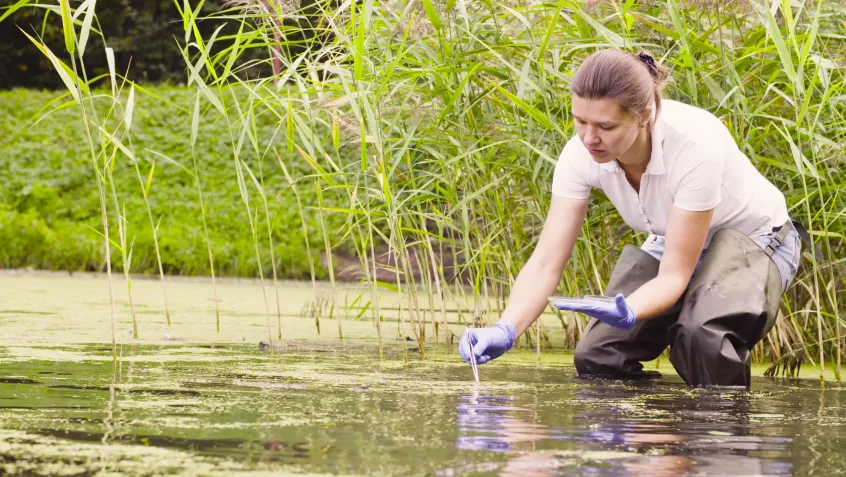
Your children or other young people in your life might already have their eyes on an environmental science career in areas such as sustainability, environmental protection, clean energy clean energy such as solar and wind, climate adaptation, or coastal management. They have plenty of options, too, since they can work in business, government, education, or the nonprofit world. The field is broad enough that a single degree can open doors to a wide range of environmental science careers, from ecologist and wildlife manager to environmental educator, meteorologist, land use planner, and even environmental lawyer. Teens drawn to working outside can also explore outdoor careers on public lands such as park ranger, natural resource specialist, and conservation technician.
So how can you help them turn that interest into reality?
The guidelines below are not requirements for entering the field, but these activities can pave the way and spark interest in a particular niche.
Start with a Strong STEM Foundation
For starters, focus on STEM education while they are still in high school. They can load up on science, technology, engineering, and math courses, including advanced and AP classes where available, since these lay a terrific foundation for environmental science. Beyond the classroom, encourage your teens to join STEM-related after-school clubs and enter STEM contests and competitions. They can volunteer for local environmental projects through their city government or an eco-focused nonprofit. They might also look at a problem facing their own community and launch an initiative to help solve it.
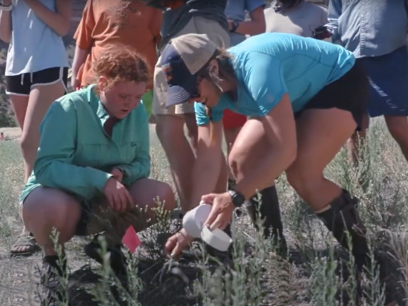
Hands-on experience outside the classroom can be the moment everything clicks. Tucker Garrett joined a NEEF Greening STEM project as a high schooler in Grand Junction, Colorado, spending a weekend on the Colorado River releasing gall wasps to control an invasive plant in McInnis Canyons National Conservation Area. He almost didn't go. What started as a favor to a friend rekindled a love of science he had nearly lost during the pandemic, and he is now studying at Colorado Mesa University with his sights set on becoming an environmental scientist. As he put it, the trip helped him see the work was not just about a fun day on the river. It was about changing the world.
These opportunities are not limited to students near big universities or well-funded districts. Research shows that rural students start high school just as interested in STEM as their suburban peers, yet they are far less likely to go on to a postsecondary STEM program, often because the pathways simply are not there. NEEF grants work to close that gap by bringing place-based projects to rural and underserved communities, from pollinator gardens built with students near Shenandoah National Park to prairie ecology fieldwork with seventh graders in the Quad Cities of Iowa.
Plan for the Right Education
Education requirements vary widely by career. Environmental scientists typically need a bachelor's degree in environmental science or a related field such as biology, chemistry, engineering, geosciences, or physics, according to the US Bureau of Labor Statistics. Some technical, conservation, and clean-energy careers may follow different training paths. For example, environmental science and protection technicians may enter the field with an associate's degree, while solar photovoltaic installers typically need a high school diploma and on-the-job training.
Advanced research or academic positions may require a master's degree or PhD. Demand also varies by occupation. Environmental scientist and specialist jobs are projected to grow 4% through 2034, while solar photovoltaic installer jobs are projected to grow 42%.
Build Skills and Connections
An InTeGrate environmental career-focused webinar sponsored by the Association for Environmental Studies and Sciences (AESS) and the National Association of Geoscience Teachers (NAGT), offers a few additional suggestions, adapted below, that you can share with your teens:
- If a college offers environmental career exploration and planning courses, take them to help identify and focus on career interests.
- Take advantage of any campus opportunities to interact with environmental professionals who might be guest lecturers, host field trips, or serve as mentors. Ask them about current challenges and how they are approaching projects and programs.
- Participate in any cooperative education programs the college might offer that blend on-campus learning with projects at participating employers.
- Work on soft skills, such as creativity, persuasion, communication, collaboration, adaptability, and time management.
- Develop a portfolio of work, not just a resume. Research papers, studies, reports, maps, diagrams, infographics, slide presentations, webinars, blogs, and vlogs all help document and showcase accomplishments.
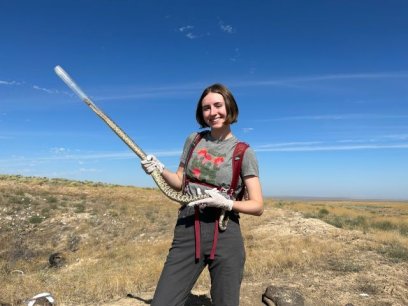
The advice about meeting professionals is worth taking seriously, because a single conversation can change a trajectory. On a field trip during a Greening STEM project in Idaho, high school senior Abella Cathey struck up a conversation with a natural resource specialist she happened to meet in the field. He encouraged her to apply for a technician role she had assumed was out of reach. She landed the job before finishing her first year of college and is now studying biology at Boise State University. Plenty of teens feel unsure about their direction after graduation, and real exposure to people doing the work is often what turns a vague interest into a clear plan.
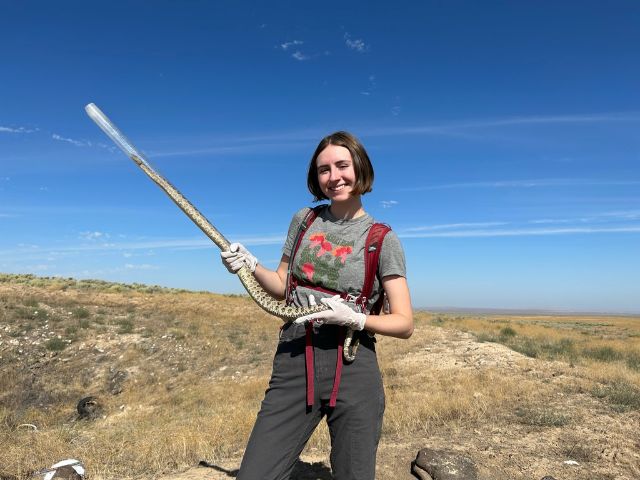
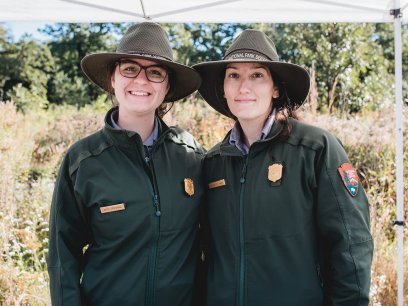
Those soft skills matter as much as the technical ones. Lola Heasley, a park naturalist with 25 years of experience, told NEEF that a passion for the environment, a positive attitude, the ability to work both independently and as part of a team, and creative problem-solving are what carry people in this field. Much of her guidance on building an outdoor career also covers the nuts and bolts of seasonal and federal hiring.
Seek Out Internships and Entry Points
Students should also work at securing an environment-related internship to gain hands-on, practical experience. They can do this during college or after graduation to get themselves job-ready. Seasonal positions are another strong way in, since the National Park Service alone hires thousands of seasonal staff each year, and the NPS Pathways Program offers internships and employment for current students and recent graduates. Several national organizations exist specifically to help young people get a foothold in conservation and environmental science. A few worth exploring include the following:
- AmeriCorps, which places members in community and environmental stewardship projects and offers a living allowance and education funding.
- The Student Conservation Association, which provides paid positions and gap-year programs in all 50 states.
- The Youth Conservation Corps, a summer employment program for youth ages 15 to 18 in parks, forests, and wildlife refuges.
- The Community Volunteer Ambassador Program, a National Park Service partnership for recent high school and college graduates.
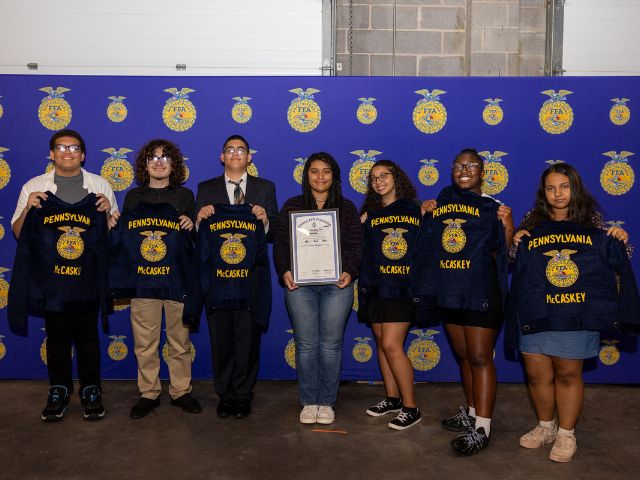
Students don't have to wait for college to get started. An accessible on-ramp is often a club at their own school. FFA is one of the biggest, and despite the farming name, it runs programming in wildlife, forestry, and environmental science, with leadership roles and career competitions attached. Groups like 4-H can offer similar paths. At a high school in Lancaster, Pennsylvania, students in a new environmental and agricultural science program chartered their own FFA chapter. For senior Valerie Gray, it redirected her future. She arrived expecting to study psychiatry and left with a plan to work in environmental policy, and she now leads the chapter as its president.
A Career That Makes a Difference
The path into environmental science is rarely a straight line. For some young people it begins with an AP class, for others a weekend on a river or a chance conversation in a field. What they share is a moment of real contact with the work and the people who do it. You can help create that moment, by getting them outside and into nature, encouraging the club, signing the permission slip for the learning experience, or pointing them toward the one conversation that opens a door. NEEF's environmental education resources offer activities to nurture the interest that is already there and make room for it to grow.
Organizations interested in supporting hands-on work like the projects described here can learn more about NEEF's Greening STEM projects.
Originally published: November 2019 • Updated